
Zero 10, Art Basel
the first ever presentation of a special sector of Art Basel, dedicated to digital art only.

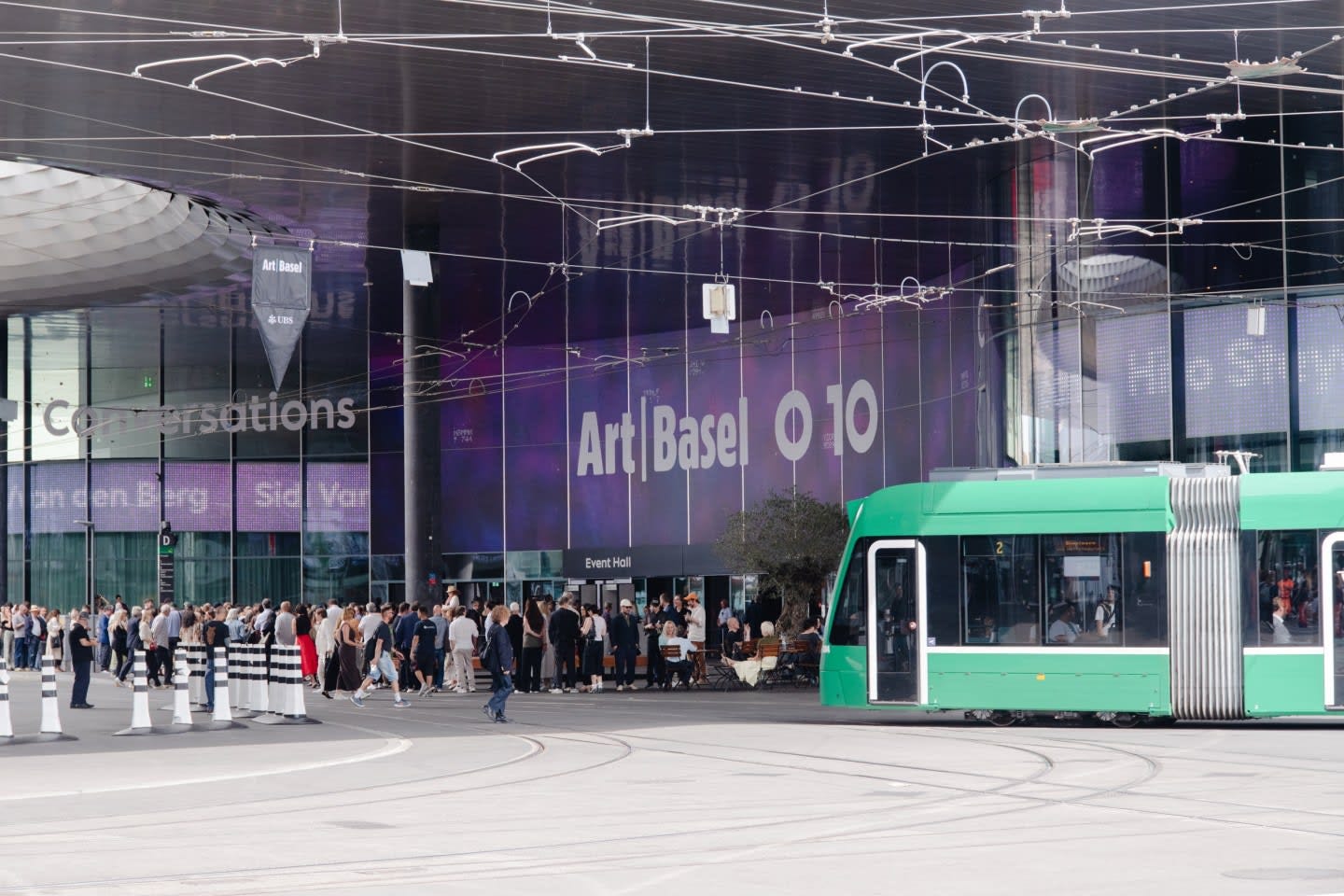
Zero 10 constitutes Art Basel’s dedicated platform for digital art and, following a highly successful debut during Art Basel Miami, arrives in Basel for the first time. Admission remains free of charge, requiring only prior registration through submission of a name and email address
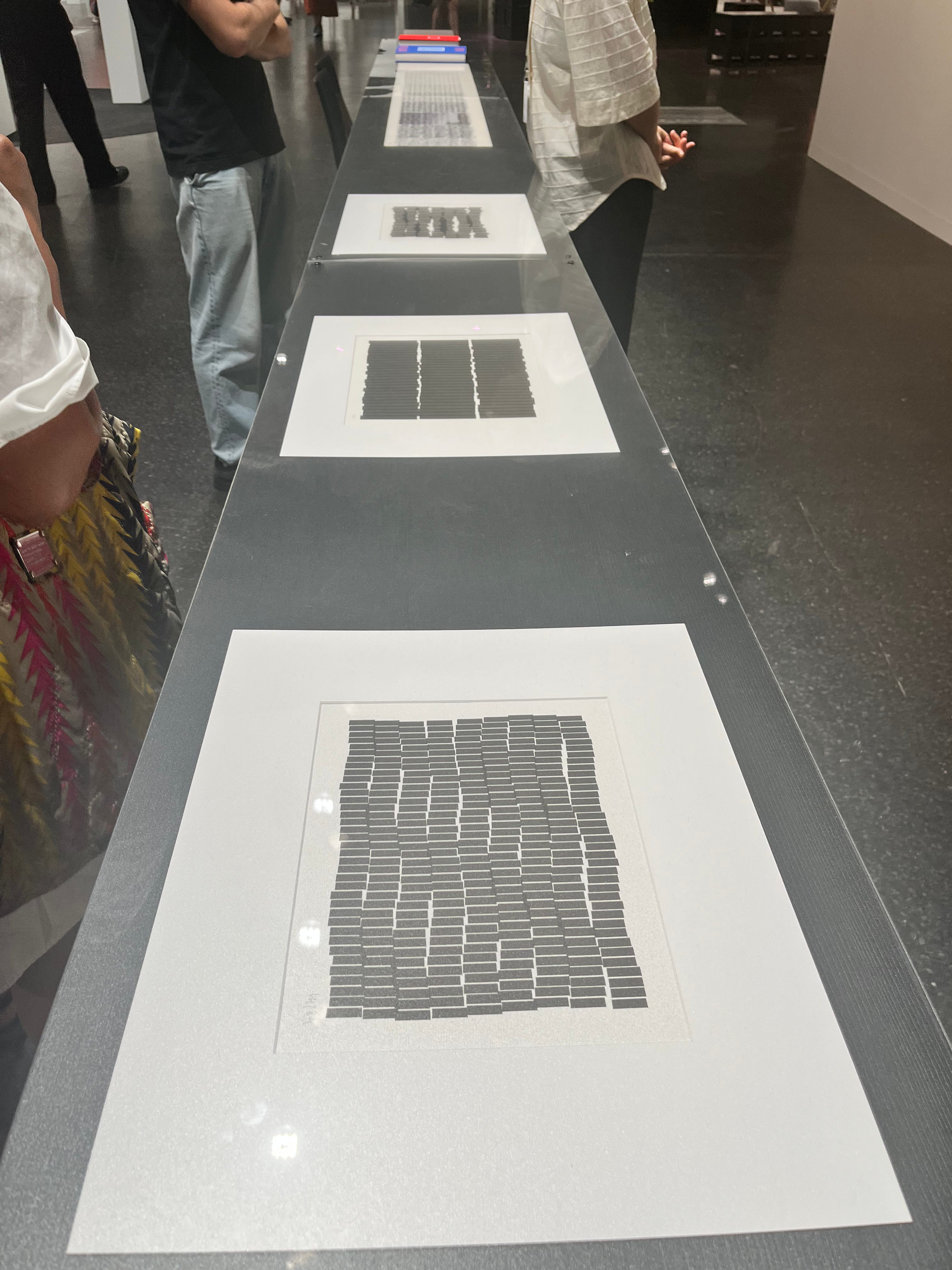
.Dominated by some of digital art’s most influential pioneers, Zero 10 presents practitioners whose engagement with computational systems dates back to the 1960s, an era during which artists first explored programming as a means of generating colour, form, and visual structure. Among such trailblazers stands Vera Molnar (1924–2024, Galerie Oniris / Interface Gallery), whose experiments with algorithmic image-making began during those formative decades. Through custom-written programs, computational processes produced abstract arrangements subsequently transmitted to connected plotters, enabling physical realisation through mechanical drawing. Resulting compositions frequently comprise dense black bars arranged in layered horizontal sequences, evoking aerial views of military compounds or regimented architectural landscapes.
A markedly different trajectory emerged through the work of Harold Cohen (1928–2016, Gazelli Art House), a British-American artist who, in collaboration with Stanford University, developed the autonomous software system AARON. Capable of independently generating visual forms, AARON occupied a unique position between machine intelligence and artistic authorship. Cohen, whose background originated in painting, appropriated those computationally generated images and painstakingly transferred them onto canvas by hand—a procedure repeatedly rediscovered throughout successive generations of digital practitioners. Comparable concerns appear in Miao Ying’s Mutual Conditioning(2026), presented by Kiang Malingue (alongside St. Stephan Rosemarie Schwarzwälder) within Art Basel’s Parcours programme, housed inside a temporarily repurposed bicycle garage. Initial outputs assume characteristics reminiscent of landscape compositions, gradually unfolding into increasingly complex visual environments.
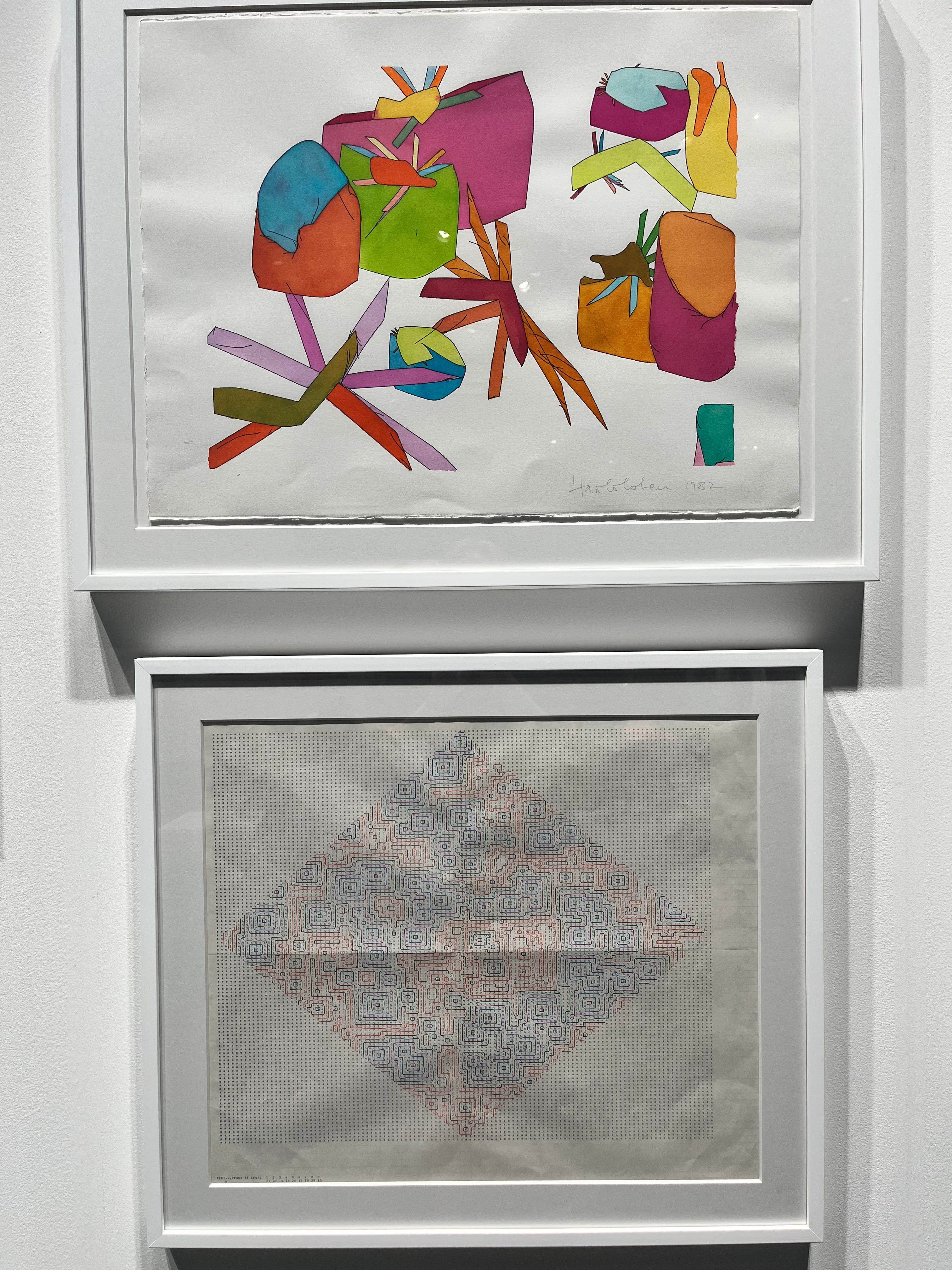
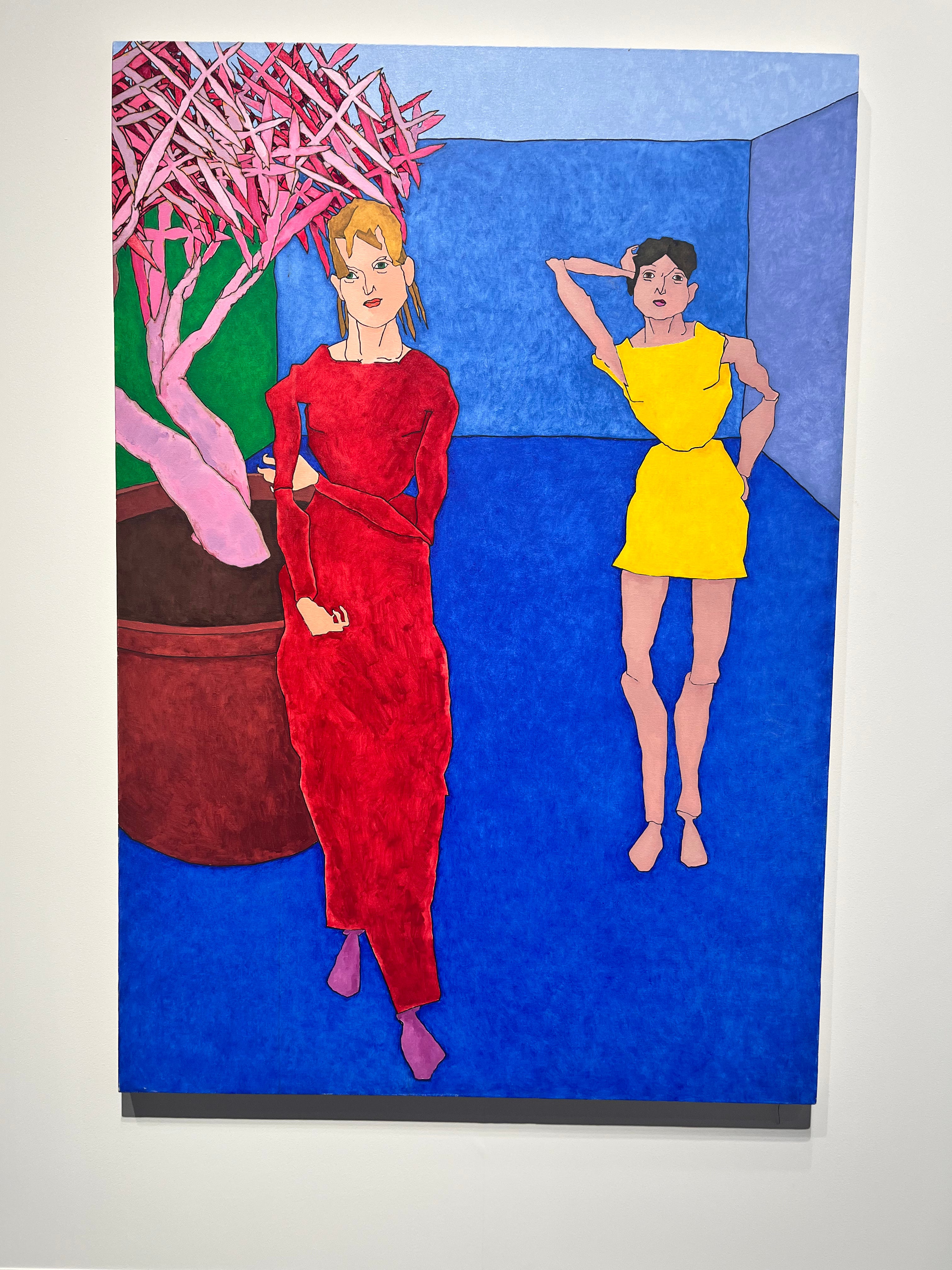
As AARON evolved throughout the late 1990s and early 2000s, figurative group portraits increasingly replaced earlier abstract configurations. Rendered through fields of colour recalling watercolour washes or diluted inks, such compositions subsequently underwent large-scale printing under Cohen’s direction. At first glance, recognition of computational origins proves remarkably difficult. Expressive contour lines, nuanced modelling of bodily volume, and sophisticated chromatic relationships appear to draw upon an immense reservoir of painterly experience, although every visual decision ultimately originates from algorithmic procedures operating beneath a digital surface.
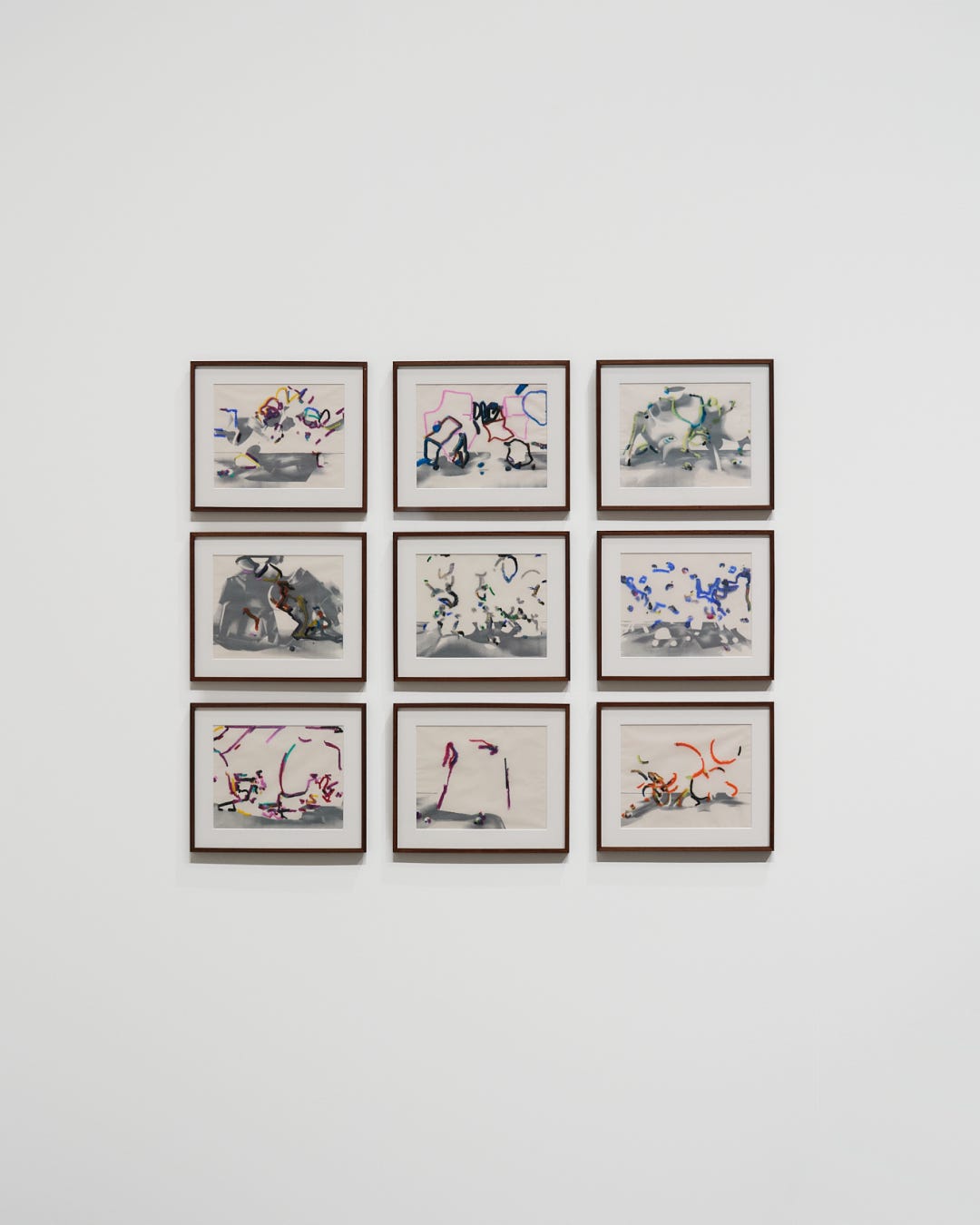
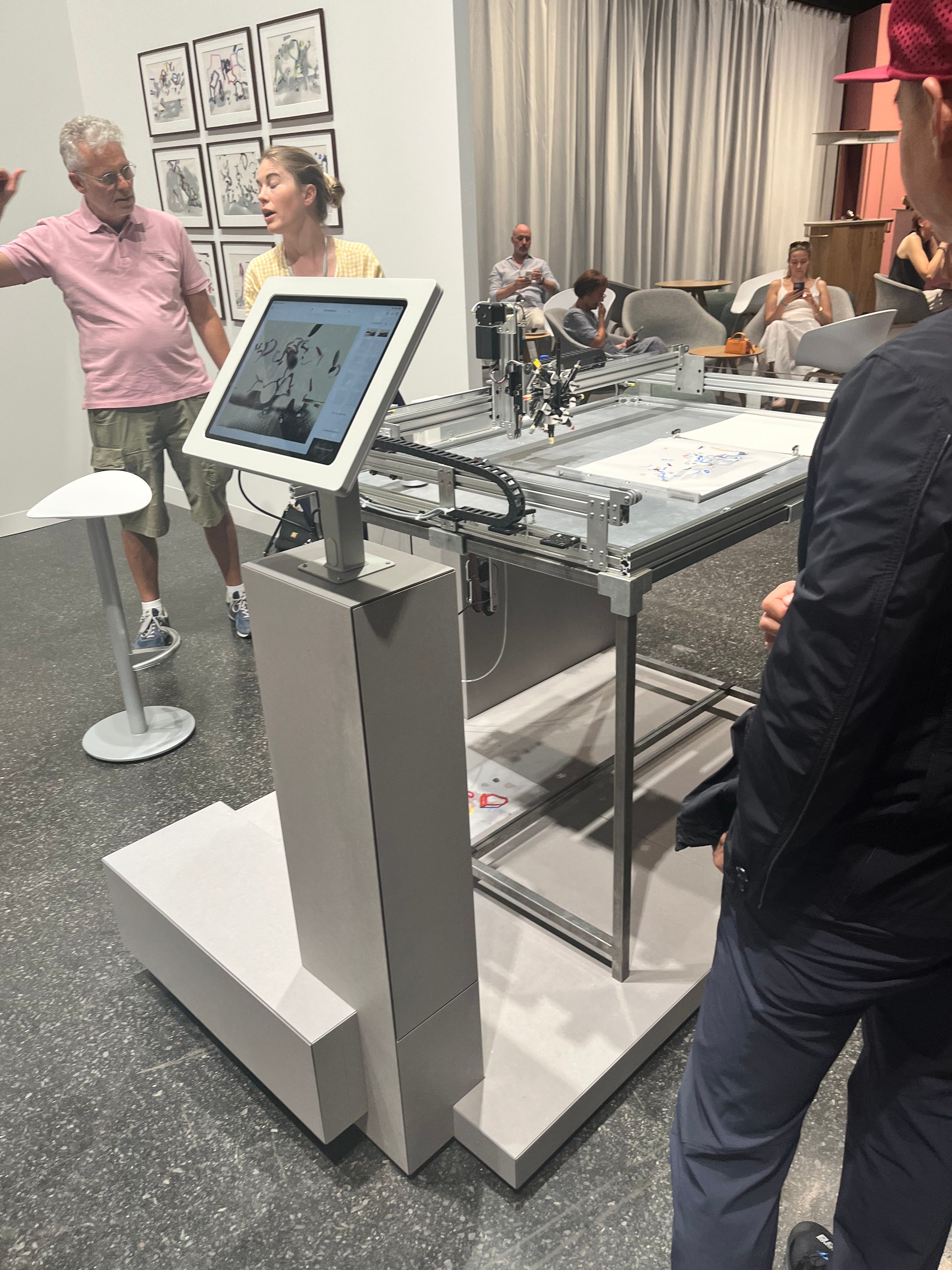
A related methodology appears at Art Blocks through work by William Mapan (*1988). Activation of a simple interface on an iPad initiates image generation, whereupon a connected plotter immediately begins producing physical prints before spectators’ eyes. Delicate, watercolour-like compositions emerge through such processes, perpetuating a compelling illusion whereby mechanical production acquires qualities traditionally associated with manual craftsmanship.
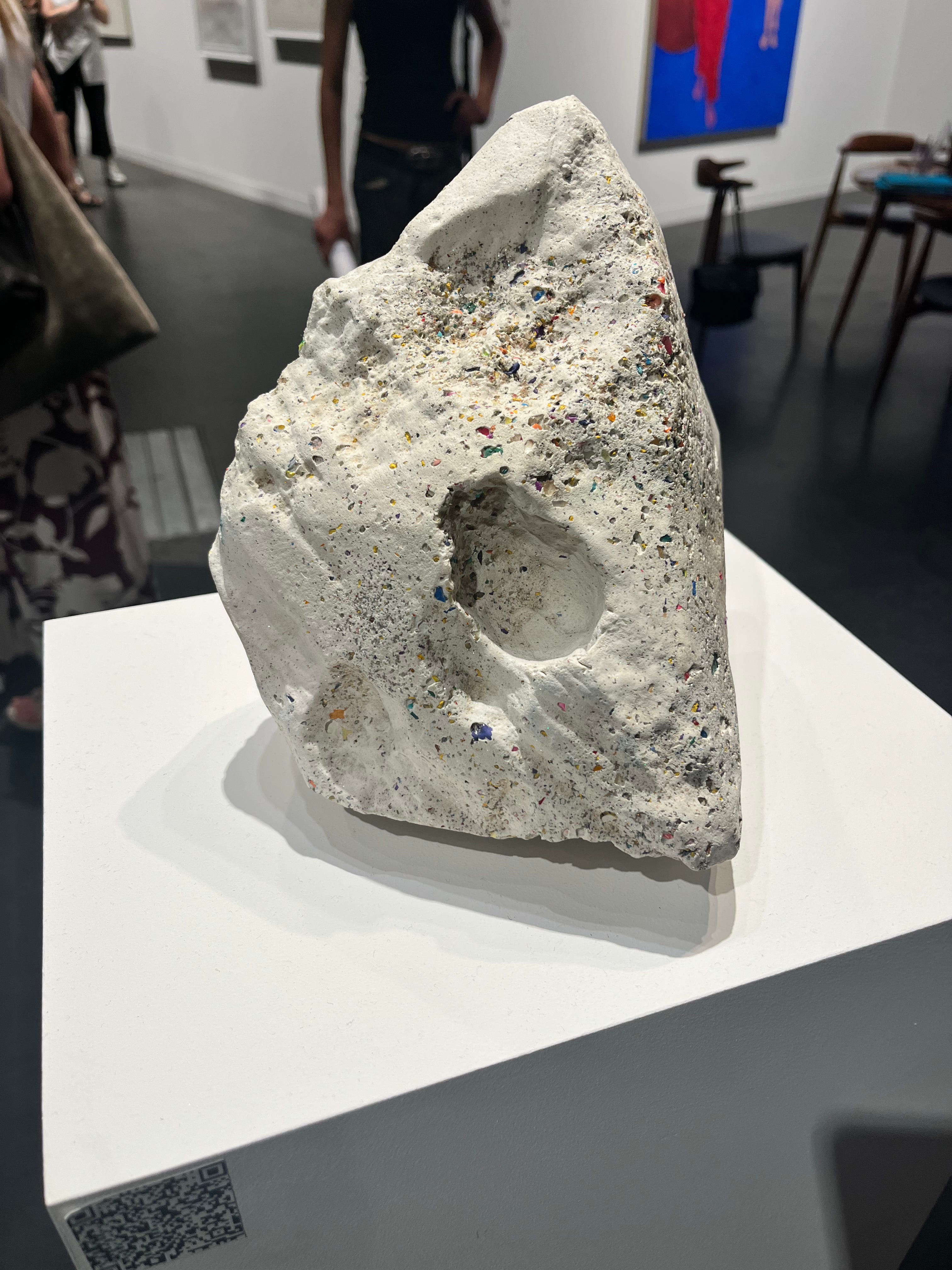
Agnieszka Kurant (*1978, Marian Goodman Gallery) advances considerably beyond algorithmic abstraction toward tangible sculptural presence. Drawing upon social-media responses to historical events, she constructs computational systems capable of translating collective digital sentiment into three-dimensional form. Through combinations of pulverised stone, resin, and related materials, resulting structures acquire appearances strongly resembling naturally formed geological specimens. Sentimentale (2022) exemplifies such an approach. Although outwardly mineral in character, underlying origins remain entirely virtual, producing an object whose complete physicality conceals fundamentally digital beginnings.
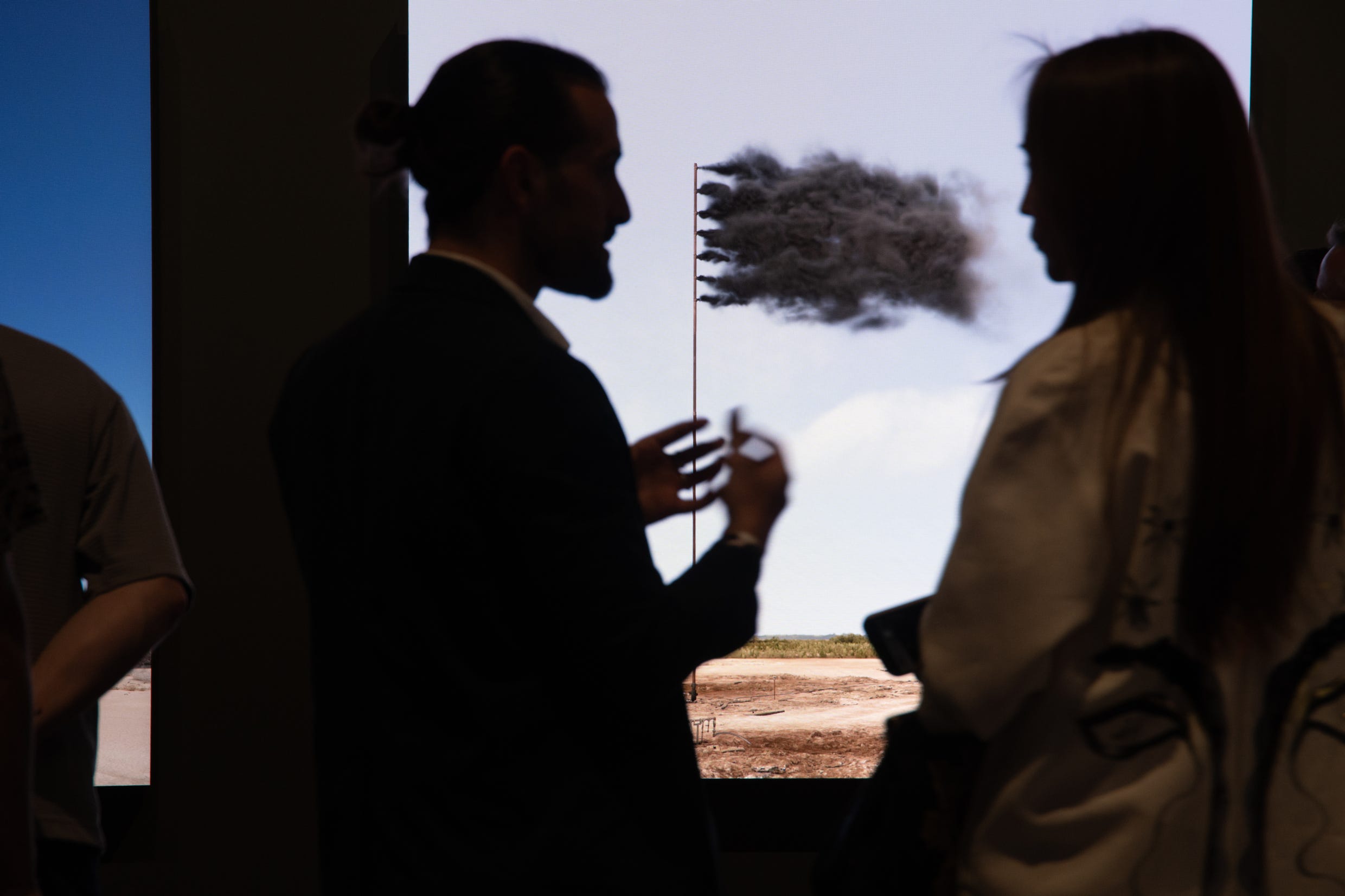
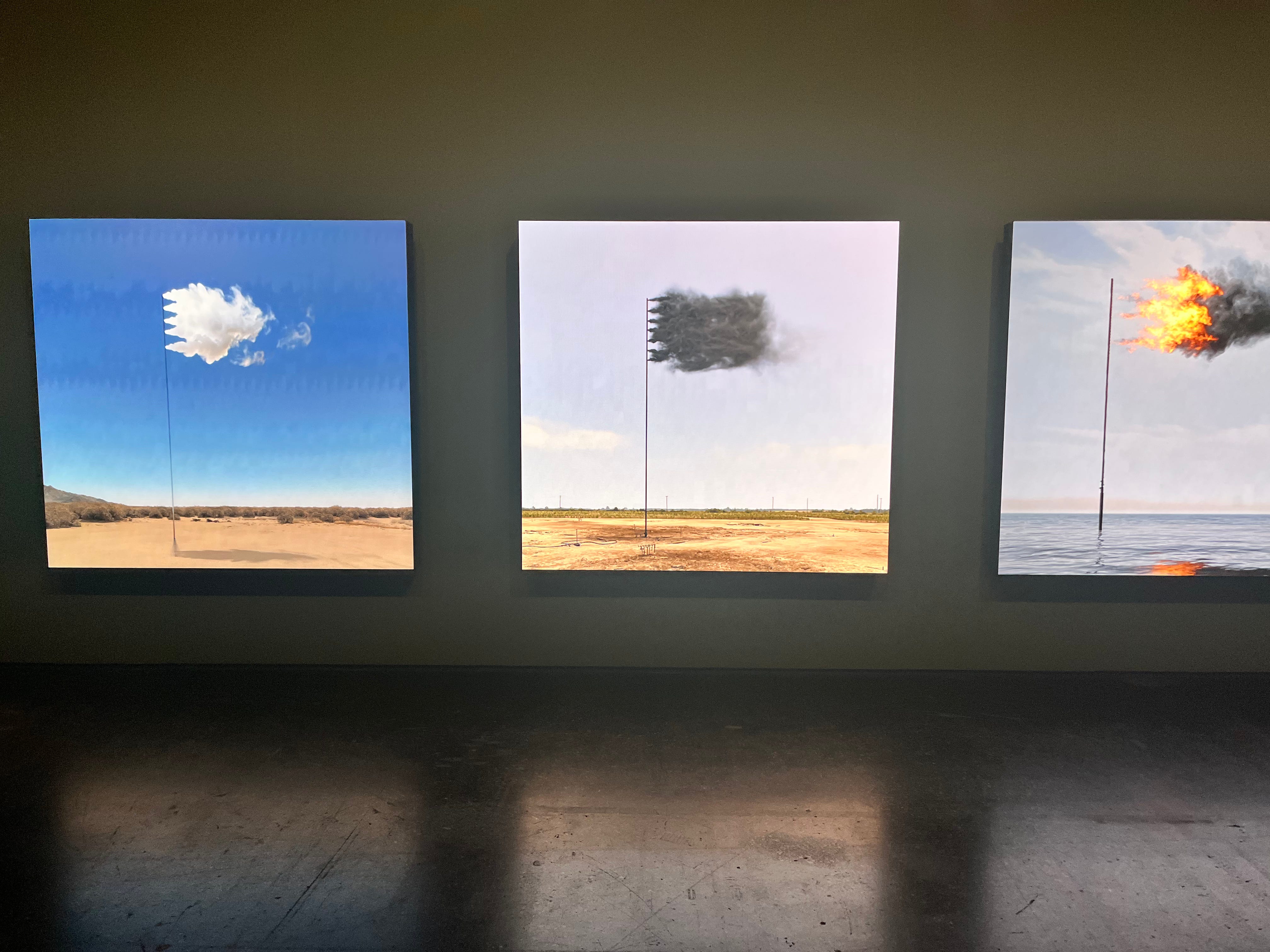
John Gerrard (*1974, Fellowship) contributes a particularly poetic intervention through Western Flag (Spindletop, Texas), Flare (Oceania), and Standard (2017, 2022, 2023). Transforming one of nationhood’s most recognisable symbols into an ephemeral phenomenon, Gerrard dismantles conventional associations between flags, territorial sovereignty, and political power. Within Western Flag, white vapour rises from vertically aligned nozzles suspended several metres above ground level, temporarily assuming flag-like form before dissolving into surrounding air. Flare substitutes black smoke, while Standard employs flames gradually fading into dark atmospheric residue. Fellowship presents through use of a game engine created artwork through a three-screen video installation.
Equally infused with subtle humour, Rafael Lozano-Hemmer’s Panoptic Chasma (2024–2025), presented by bitforms Gallery and Max Estrella, scrutinises contemporary surveillance culture and widespread visual monitoring of public space. At the centre of a spiral-shaped digital projection apparatus, a surveillance camera resembling equipment commonly encountered throughout public transportation networks captures visitors standing before its lens and immediately returns their image. A second installation within the series employs thermal-imaging technology, displaying heat signatures upon a vertically oriented screen. Far more than technological spectacle, both configurations function simultaneously as invitations toward self-performance and self-reflection. Through instantaneous feedback unavailable within conventional surveillance systems, observed individuals regain agency over personal representation, reclaiming forms of visual control ordinarily removed through one-directional observation.
Rafael Lozano-Hemmer’s Panoptic Chasma, bitforms Gallery and Max Estrella
Rafael Lozano-Hemmer’s Panoptic Chasma, bitforms Gallery and Max Estrella
Art Basel
Zero 10
Messeplatz
Basel
15-21 June 2026
Photo credits:
Vera Molnar, Galerie Oniris/Interface Gallery
Harold Cohen, Gazelli Art House
William Mauren, Art Blocks
Agneszia Kurant, Marian Goodman Gallery